
IN THIS ARTICLE
Big waves can be exhilarating, but they can also be intimidating. Many surfers, whether beginners or experienced, hesitate when the waves get bigger. Fear is natural, but it doesn’t have to hold you back. In this article, we’ll explain why the fear of big waves happens and provide actionable steps to overcome it.
CONTENT
Understanding Fear
Fear is a survival mechanism designed to keep us safe, and when faced with big waves, it triggers our fight-or-flight response. This can manifest as hesitation, anxiety, or even panic. But here’s the key: fear itself isn’t the problem. The problem is how we respond to it. When surfing bigger waves, there are mainly two types of fear at play:
1. Existential Fear: The fear of drowning, injury, or losing control in a wipeout.
2. Trigger-Based Fear: The fear that arises from specific conditions, such as wave size, powerful sets, or heavy wipeouts.
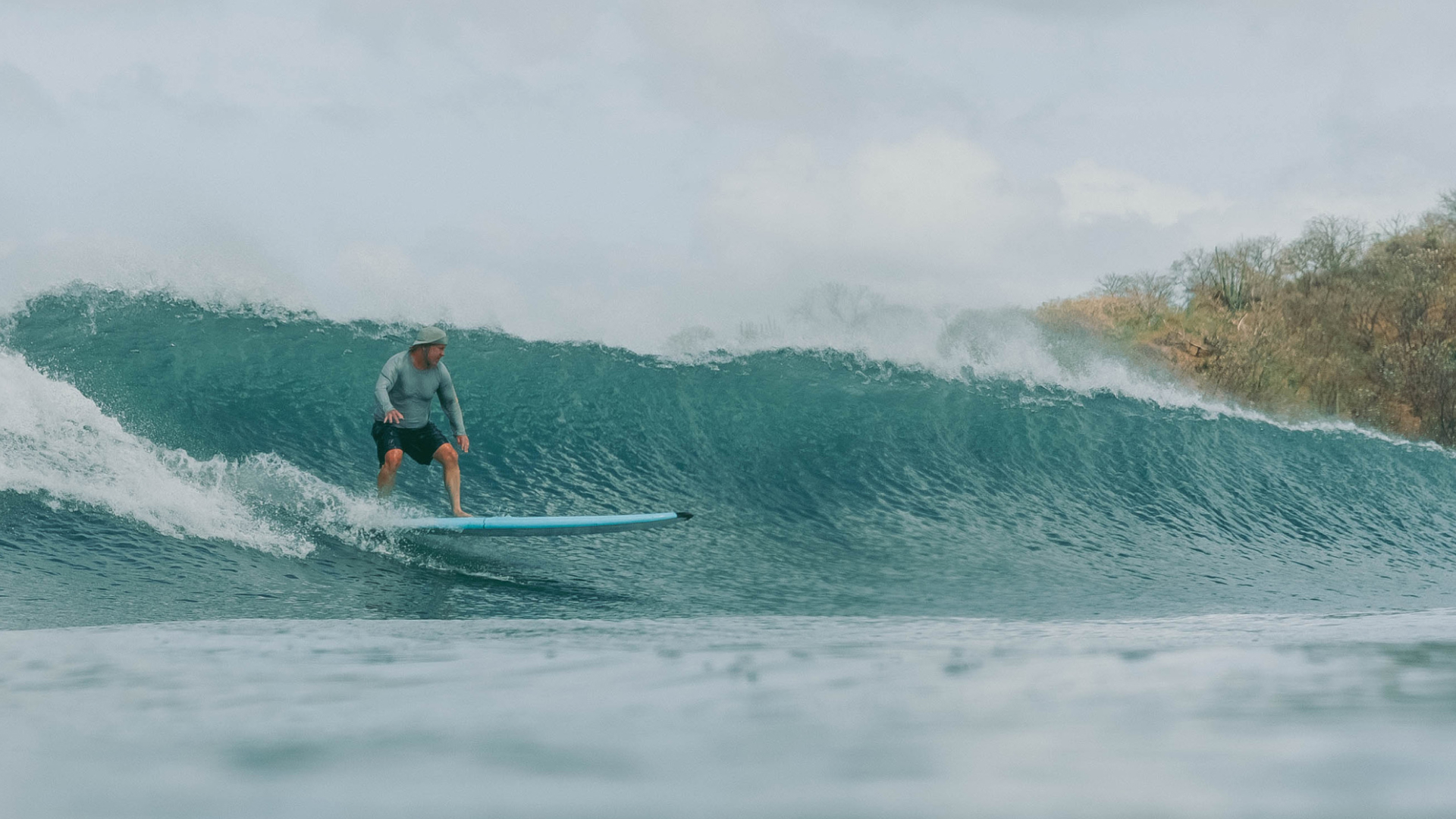
Changing your response to fear
Since fear is a natural response, our goal isn’t to eliminate it but to manage it and use it to our advantage. Here’s how:
- Slow, Controlled Exposure: Start by gradually increasing the wave size you surf in. Don’t jump straight into waves that terrify you. Build up step by step. This will require some time and understanding of the conditions, but it is the most effective way to push the boundaries of your comfort zone. You will retrain your subconscious mind not to be scared as the waves get gradually bigger.
- Breath Control & Relaxation: This one will be especially useful for trigger-based fear. Big waves demand a calm, controlled approach. Before paddling out and during your session, practice slow, diaphragmatic breathing to prevent your nervous system from going into panic mode. You can put a hand on your belly to feel it push out as you breathe out and pull in as you breathe in. When we’re in fight-or-flight, we don’t breathe this way. Hence, you signal to your brain that you are safe.
- Reframing Your Mindset: Fear and excitement feel similar in the body. To support the work of desensitizing the triggers and helping our nervous system stay calm, our mind also needs to be on board. Instead of seeing big waves as something to dread, try to see them as a challenge to embrace. This is easier said than done, but acquiring knowledge and skills (see next section) can be very helpful to do this.
“I learned that courage was not the absence of fear, but the triumph over it.” -Nelson Mandela

Skills and knowledge you can acquire
Confidence in big waves doesn’t just come from mental strategies, it also comes from knowledge and technical preparation. There are lots of things to learn about the ocean and yourself.
For example, did you know that it is extremely unlikely that you will get held under for more than 10 seconds, even on bigger days? Did you know that you can survive 3 minutes without oxygen? Did you know that it’s the CO2 levels in your blood that signal the need to breathe, not a lack of oxygen? This means you might feel like you need to breathe when you really don’t. This knowledge can help you change how you perceive what’s dangerous or not in the surf.

More skills and knowledge you could consider depending on your experience:
- Master Duck Diving & Turtle Rolls: The better you are at getting through waves when paddling out, the less overwhelmed you’ll feel.
- Increase Paddle Strength & Fitness: A lack of paddling fitness can be a source of stress in the water, as surfers can feel out of breath in an environment they don’t control. Strong paddling also gets you into waves earlier, reducing last-second wipeouts.
- Improve your Ocean Reading Ability: Understanding wave behaviour helps you position yourself more safely and avoid getting caught in the impact zone too often. It will also help you get past the break while using less energy, which can boost your confidence and help you stay calmer when the waves are bigger.
- Understand how Waves Break from Beneath: Go out into the water with a mask to explore beneath the waves. Gain insight into their movement and how they break as you swim between the bubbles and the seafloor. See what occurs underwater when a wave passes by; how deep does the impact of the crashing lip go, etc.
Check out our online surfing tutorials for more technical advice on reading the ocean, passing the break, and paddling strength and technique.
Building Trust in Yourself
Surfing big waves isn’t just about skill; it’s also about trusting yourself. Here are some ways to build that trust:
- Practicing Hold-Downs: Train yourself to stay calm underwater by practicing breath-hold drills on land. Taking breath-holding courses can be useful to build confidence as you realize how long you can hold your breath for.
- Visualizing Success: See yourself making the drop, riding the wave, and controlling your nerves. This can help you get the feeling in your body that you can acheive your goal.
- Self-awareness: This is about knowing who we are and how we react to things. Be curious about your reactions in the water, without judgment. This will help you see things more clearly and grow through your fears.
- Trust yourself by showing up for yourself: You build trust with yourself the same way you build trust with others. Keep your word to yourself and show up the way you say you will. Match your words with actions, and attitude with behaviour.
- Surfing with the Right People: Surround yourself with supportive surfers who push you while keeping you safe.

Fear of big waves is normal, but it doesn’t have to stop you from progressing. By managing your fear, building your skills, and shifting your mindset, you can turn hesitation into confidence. Start small, train smart, and embrace the challenge, because the best waves are often just slightly beyond your comfort zone.
This article was created in collaboration with surf psychologist Lisa Davidsson. Lisa has developed a full course called “Surf Psychology” on our online coaching platform, designed to help surfers overcome fear, build confidence, and break through mental barriers in the ocean.
Watch our “How to overcome Fear of Big Waves” new YouTube Video: